
Islands of snow floated atop the landscape as grass and plants began to reveal themselves, as if waking and stretching from a long, deep slumber. March has thus far been a lamb, and although not out of the woods, Spring seems possible and near.

Along with Spring Clean Ups and Lawn Renovations, we must turn our attention to one of the most important additions to the landscape. Mulch. If you do nothing else this year, install or replenish mulch! It’s literally considered a work horse in the landscape and can quickly turn a tired, unkempt yard into a neat and aesthetically pleasing landscape, but that’s not all!
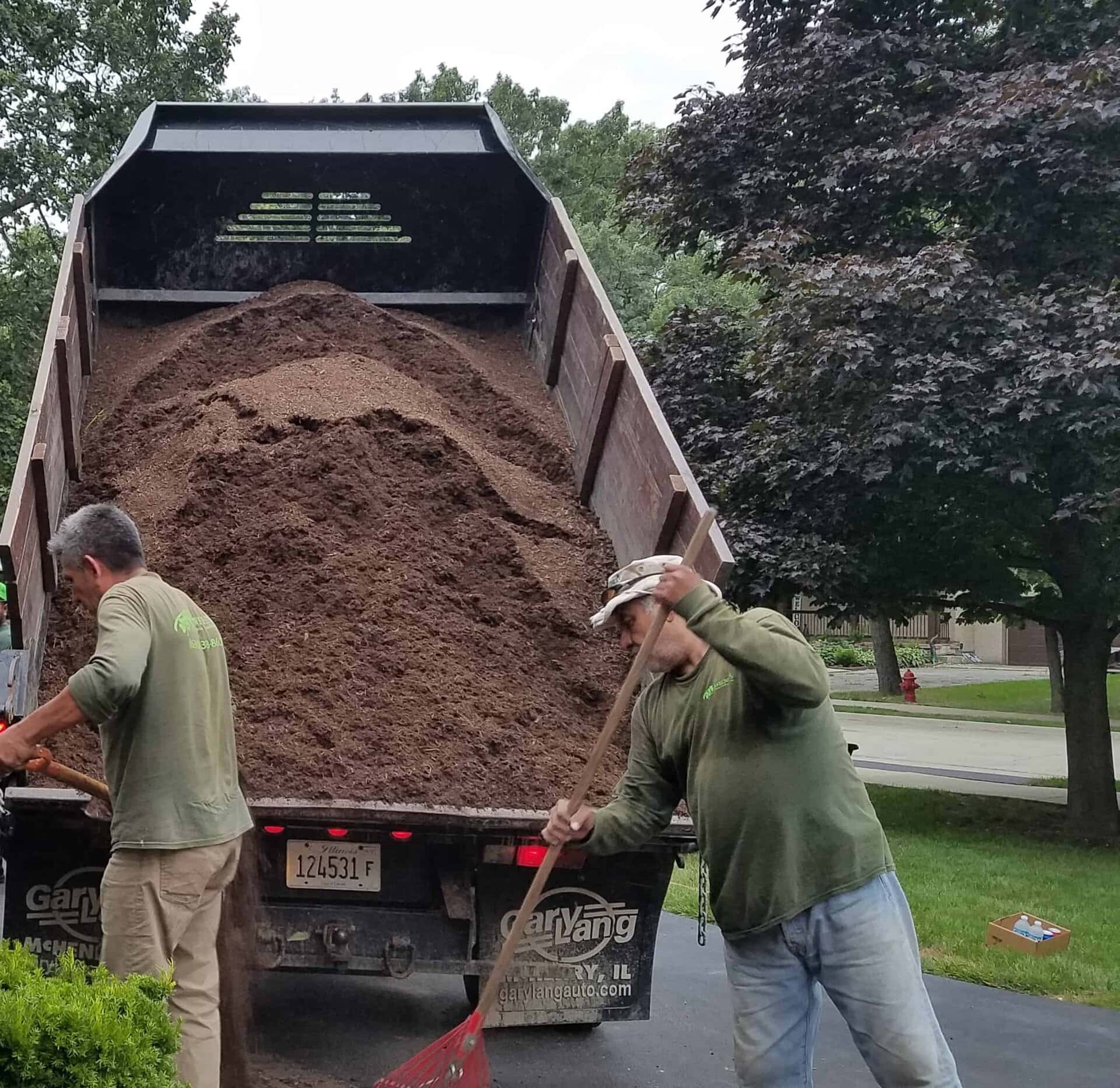
Mulch helps maintain moisture and reduces evaporation; thereby, minimizing the need for supplemental watering and capitalizing on moisture that naturally falls to the ground. Mulch also helps control weeds by suppressing germination. It is also a great insulator and can improve soil aeration and drainage. Mulch can reduce the likelihood of damage from lawn mowers and weed trimmers by creating a barrier, and lastly, mulch helps give planting beds and tree rings a uniform and manicured look.
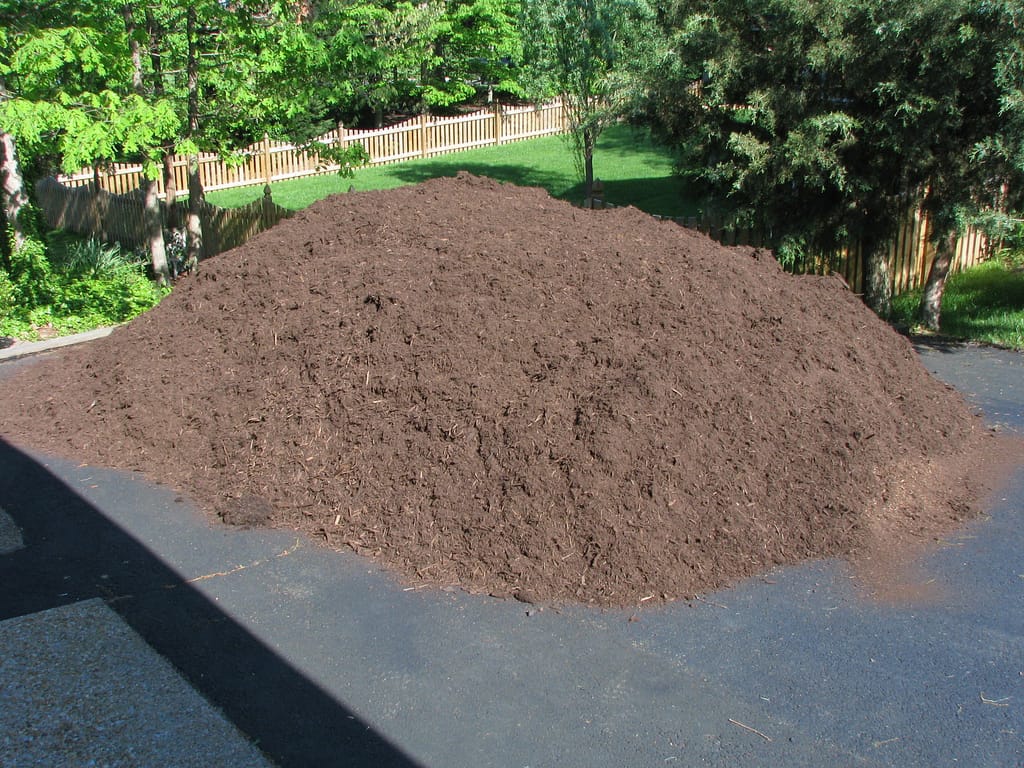
What exactly is mulch? Mulch can be defined as any material used on the surface of the soil, including organic materials such as wood chips, straw, pine needles, cocoa hulls, peat moss and lawn clippings. Inorganic mulches include river rock, shredded rubber, volcanic rock and synthetic fabrics. Organic mulches are preferred and more widely used. They are also more cost-effective, but the choice is ultimately yours.
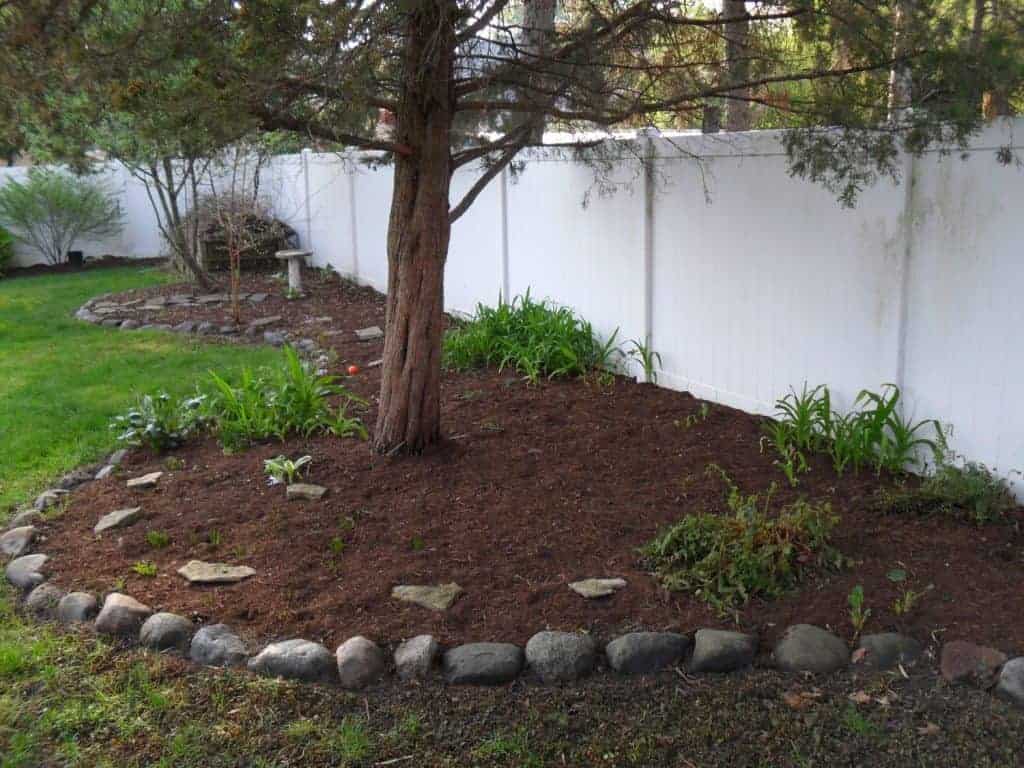
How should mulch be used? Mulch should be spread at a depth of 2-4″. Not to exceed 6″. For trees, the larger the mulched area, the better, as it should reach, minimally, the drip line (i.e. the outer perimeter of the branches); however, never mound the mulch up around the base of the tree, also known as “volcanic” mulching. This can promote disease on the lower trunk as the tree’s bark is no longer exposed to air and light. The bark will begin to rot, and the tree can no longer protect itself from insects and disease. “Volcanic” mulching also promotes the growth of secondary roots which can encircle the trunk and choke off the main roots. This type of mulching won’t kill a tree immediately, but will lead to a slow, unnecessary death.

When should mulch be used? Almost any time is a good time, but many prefer to mulch or re-mulch in Spring. Reach out to Sweeney’s today, and let us provide and install that “cure-all”. You and your landscape will be glad you did! We proudly serve the communities of Villa Park, Elmhurst, Oakbrook, Oakbrook Terrace, Glen Ellyn, Lombard, Wood Dale, Itasca, and more!
Sweeney’s: A Plant Based Company
Plant of the Week
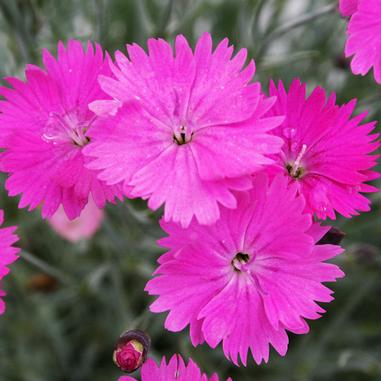
Firewitch Cheddar Pinks
Masses of fragrant, raspberry-colored flowers bloom profusely amongst bluish-green, grass-like foliage May – August. Prefers full to partial sun and dry, well-drained soil. Grows 8-12″ tall and 3-6″ wide. Excellent groundcover. Drought and salt tolerant. Attracts butterflies. Deer resistant.
“It was difficult to enjoy the trees and flowers when I was so aware of all that I had not yet done – pruning, weeding, transplanting, mulching, composting, tagging. When I was doing the work myself, I was happy, free.”
— Jay Neugeboren
Well wishes,
Kim Sweeney