
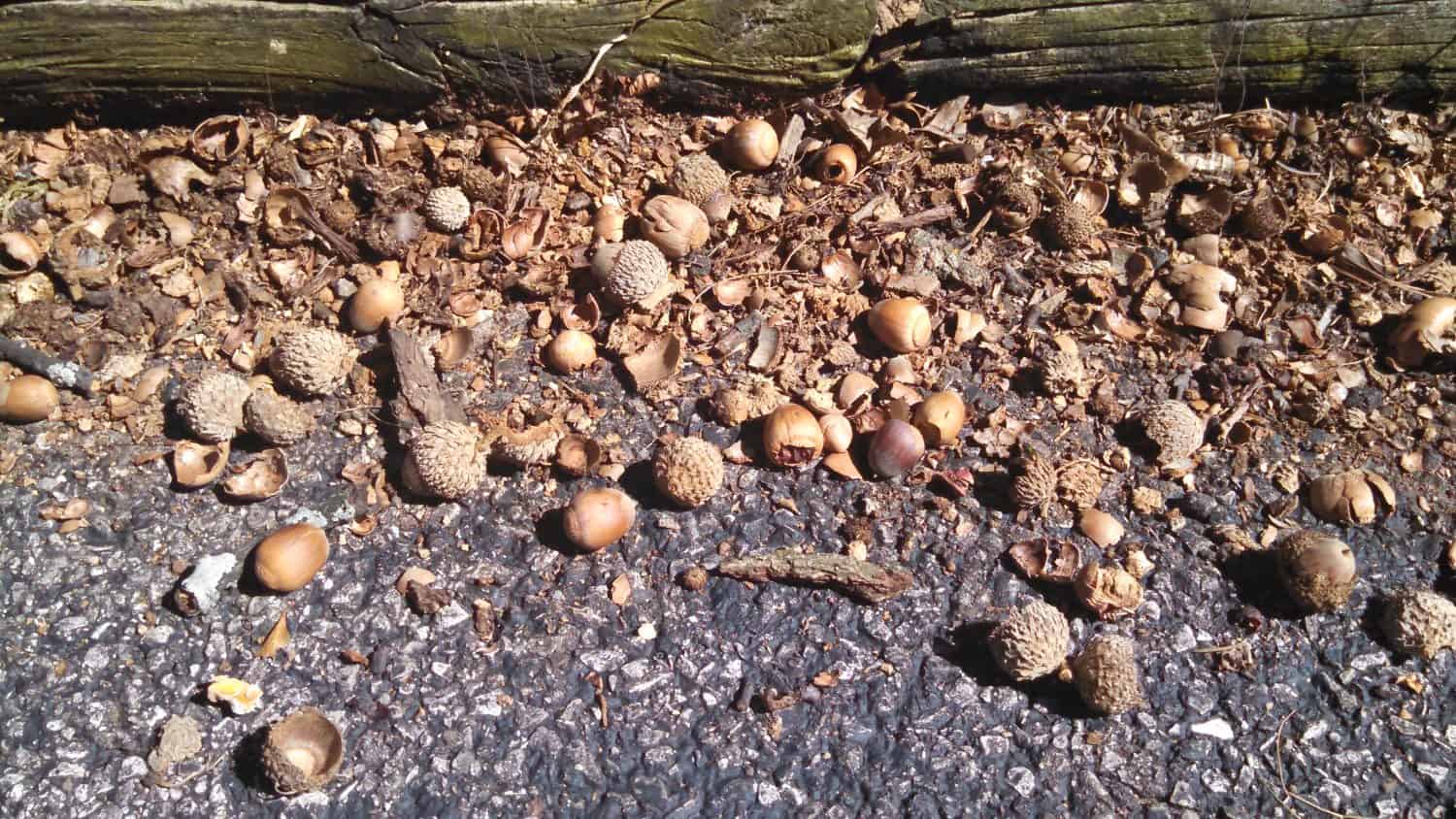
 Without so much as a warning or civic alert, the bombs began to fall. Sparsely, at first, quickly ramping up to a barrage. They fell with great velocity, unbiased yet fierce. The driveway, lawn, roof, streets and cars – none of them immune to the blitzkrieg. We had been overrun quickly, swiftly, and deftly. The enemy was well armed and adept. Our perceived allies began to work in tandem with the enemy, and the bombing hastened. The constant thuds, pings, bangs, and bumps rattled our nerves and psyches. Shrapnel covered the landscape. The war had begun.
Acorns littered every inch of the lawn and amassed into growing piles along the driveway and curb. Although somewhat bothersome and messy, acorns serve an important role for both flora and fauna, and their partnership is nothing short of amazing.
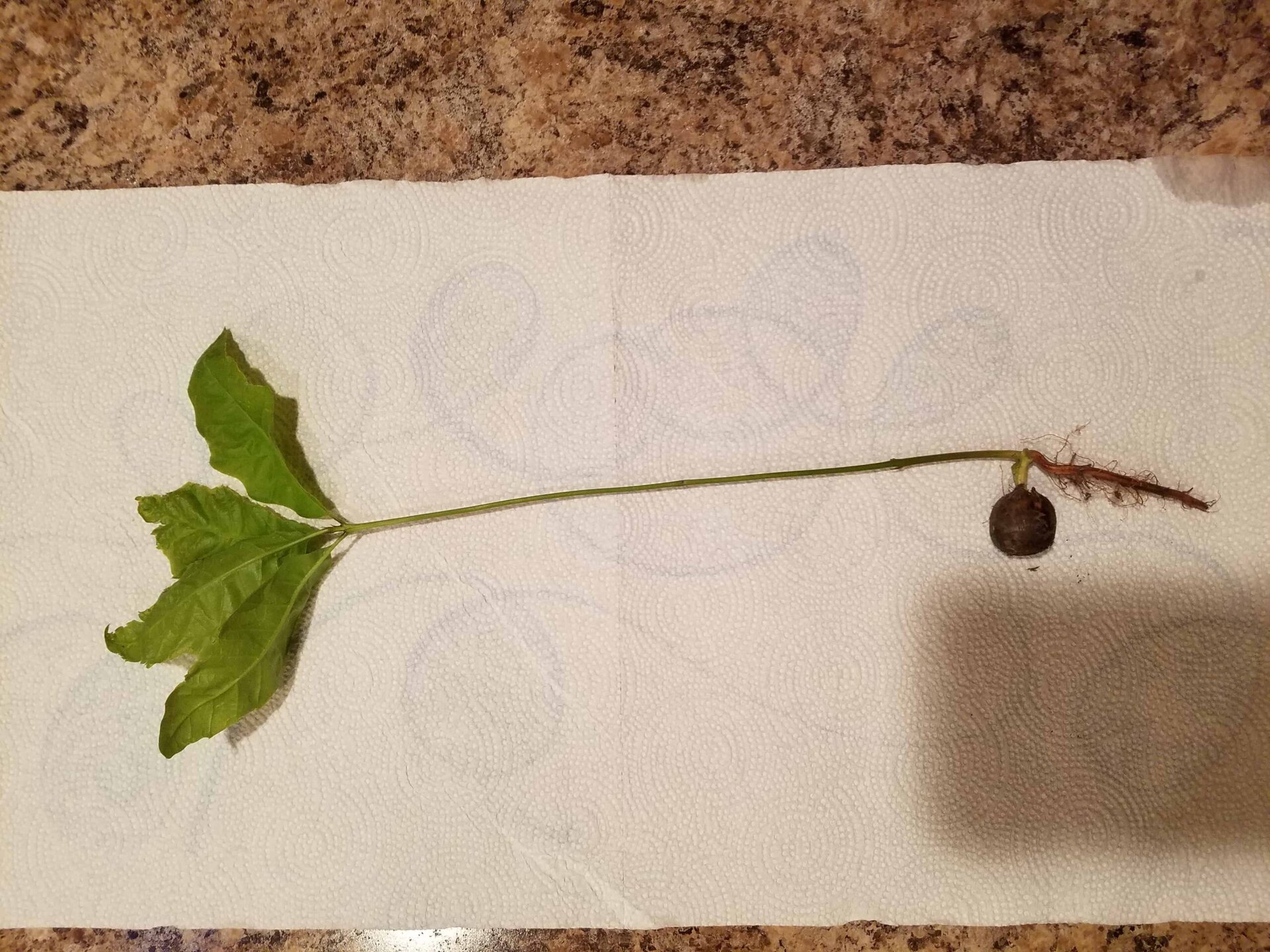
Acorns are essentially the seed of the mighty oak, and its design is pure genius. The top of the acorn contains tasty and much-needed lipids (i.e. fats) that animals need. The bottom of the acorn, where the seed or embryo resides, is full of tannins, which are bitter and unpalatable, giving the seed a better chance of survival.
Before a squirrel begins feasting, they will shake and spin the acorn to test its quality. They are listening for the sound of tiny insects, and if heard, they tend to devour the acorn immediately. Stashing an acorn full of insects is risky business as the insects could eat the acorn from the inside out. Acorns without insects are of higher quality and are thereby buried or cached. This process gives the acorn a better chance of survival. Further still, acorns of higher quality are generally buried further away from the parent Oak, while acorns of lesser quality, if not eaten right away, tend to be buried closer to the tree. This too helps increase the chances of the acorns’ germination as seeds buried directly under the parent tree would not get adequate light, water or nutrients to survive.
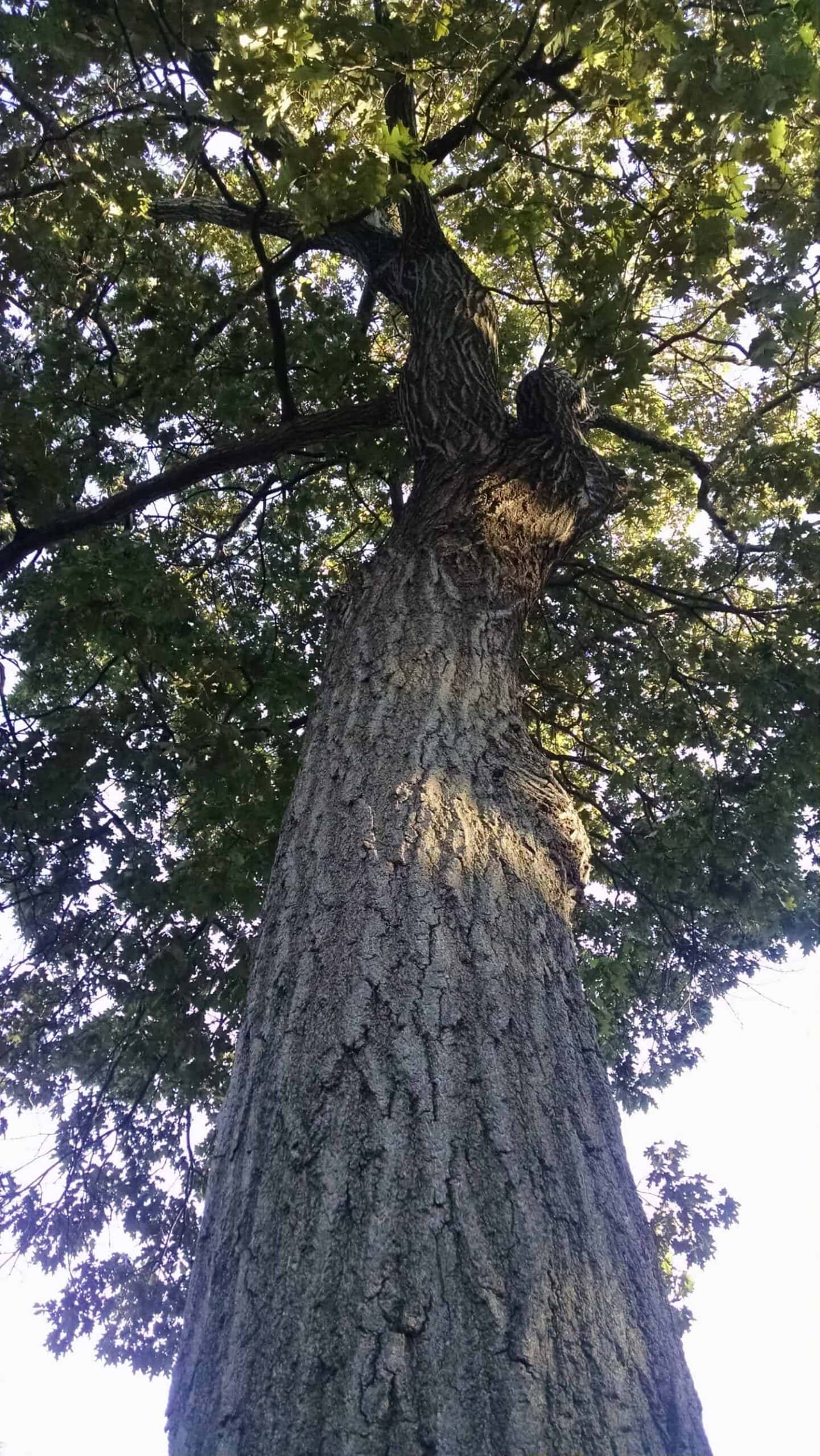
More Oaks means more acorns, and more acorns means more squirrels and so on and so forth. The mighty Oak needs the squirrel as much as the squirrel needs the Oak. Their relationship perfectly symbiotic – a model of partnership, respect and survival. If you have Oaks in your yard, and they’re producing acorns this year, contact Sweeney’s to schedule your Fall Clean Up, if you haven’t already. Eventually, their spoils will need to be removed, along with all the falling leaves and other seasonal debris.
Plant of the Week
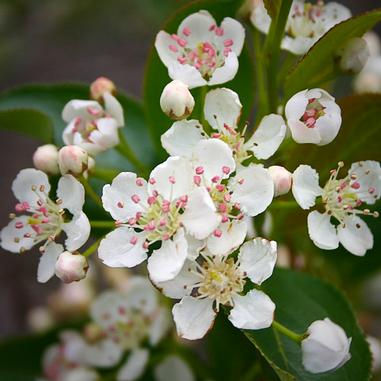
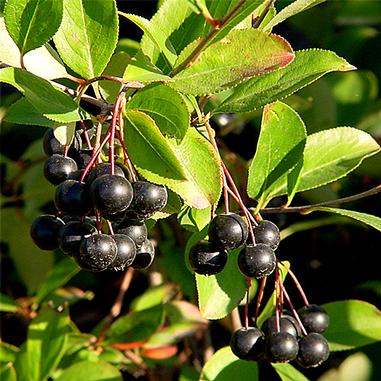
Iroquois Beauty Black Chokeberry
Upright, compact deciduous shrub produces clusters of delicate white flowers in May amongst, dark green, glossy foliage. Dark purplish-black berries emerge in Fall as the foliage changes to a lovely, purplish-red. Prefers sun to partial shade and moist, well-drained soil. Grows 2-3″ tall and 3-4′ wide. Attracts pollinators and birds.
“An infinity of forest lies dormant within the dreams of one acorn.”
-Wayne Dyer
Best wishes,
Kim Sweeney