

Beat the Heat: Your Guide to Summer Watering the Right Way
Watering your landscaping may seem simple, but knowing when to water, how much to use, which tools work best, and even whether harvested rainwater is safe to use can make a big difference in keeping your landscape healthy throughout the summer.
How and When to Water
If you are watering by hand, always water the soil rather than spraying the tops of the plants. Wet leaves can promote fungal diseases and lead to plant damage, so it is best to keep foliage as dry as possible.
If overhead watering cannot be avoided, such as when watering lawns or large planting areas, try to water early in the morning. This gives the foliage enough time to dry throughout the day and helps reduce the risk of disease.
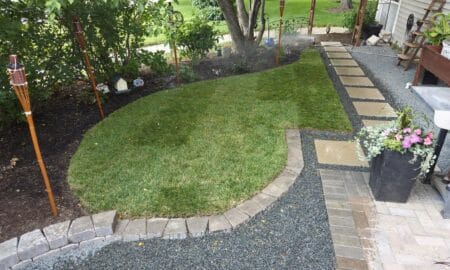
Backyard landscaping being watered by a sprinkler.
Choosing the Right Watering Tools
Since the goal is to water the soil without splashing water onto the leaves, it helps to use tools that allow for better control. A hose attachment with adjustable water flow and an extended wand can make it easier to direct water right where your plants need it most.
Mulch also plays an important role in watering success. Adding mulch to bare areas helps reduce weeds, conserve moisture during hot summer days, and minimize soil splashing while watering.
Another great option is installing a drip irrigation system. Drip irrigation is a highly efficient, low-pressure watering method that delivers water directly to plant roots through a network of tubing and emitters. This helps reduce water waste while keeping plants healthy and hydrated.
How Much Water Do Plants Need?
Supplemental watering goes a long way in helping landscapes thrive during the summer heat. Most plants need about 1 to 2 inches of water per week, depending on their growth stage and fruit development.
Mulched areas tend to hold moisture longer, so those plants may not need watering as often.
Raised beds and container gardens, however, dry out much faster than plants growing directly in the ground. These areas should be monitored closely and may require more frequent watering. During especially hot and dry stretches of summer, potted plants may even need daily watering.
Using Rainwater in Your Landscape
Rainwater is a great way to conserve water while keeping your landscape healthy. Rain barrels can easily be placed under gutters to collect water for later use.
Collected rainwater works well for watering lawns, flowers, trees, and shrubs. However, it is best to avoid using harvested rainwater on vegetable gardens. Roofing materials and debris can potentially contaminate the water and create health concerns.
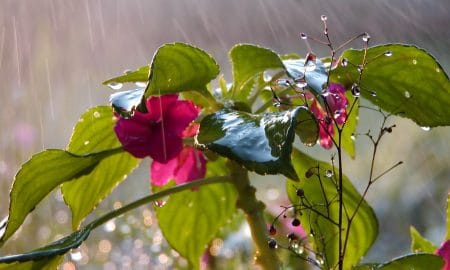
Flower in the rain
Keep Your Landscape Looking Its Best This Summer
A healthy, beautiful landscape starts with proper care and watering practices. Whether you need help maintaining your lawn and garden beds during the summer heat or you are ready to create the outdoor space you have always dreamed of, Sweeney’s Custom Landscaping is here to help.
Ask us about our lawn maintenance packages and landscaping services to keep your property looking its best all season long. From routine care to custom landscape designs, we can help bring your vision to life.
👉 Contact Sweeney’s Custom Landscaping today to schedule your FREE consultation and start getting your property looking its best this summer!